Tuesday, 14 March 2017

What if?

I went to a local pancake shop this morning (while I was out and about doing other things). There I read the freebie i newspaper, which is full of bad tidings, while I enjoyed an apple/cherry/and chipped almond pancake that I washed down with a bucket-size cup of cappucinno. How simple the good things can be.

I thought about commenting on some of the headlines: the seemingly never-ending discussion about Brexit; the pros and cons of a second Scottish referendum on independence from the United Kingdom; another little bright told me the Welsh (some Welsh) are hoping to follow the Scottish trend; and so is Sinn Fein in Northern Ireland.

And yesterday was Commonwealth Day. It was 'celebrated' by the great and the good from 52 Commonwealth member countries at Westminster Abbey in the presence of Her Majesty The Queen and, in order of succession: Prince Charles, and Princes William and Harry. Sixteen Commonwealth nations share the Queen as their sovereign Head of State although each of them is governed separately. The remainder recognise her as Head of the Commonwealth but the title isn't hereditary.

I've mused elsewhere about the enormous potential for awful confusion just over the horizon. WHAT IF, for example, the United Kingdom actually leaves the European Union? WHAT IF our UK Parliament is dispersed about the same time to enable refurbishment of the palaces of Westminster; WHAT IF the oft mooted cull in the House of Lords goes ahead about the same time; WHAT IF these events materialise around the time of the next General Election: and WHAT IF Her Majesty the Queen should go to her eternal rest at the same time?

And WHAT IF there is a sudden rise of republicanism amongst our population?

WHAT IF Prince Charles doesn't succeed to the throne either by his own choice or by popular acclaim: WHAT IF Prince William is proposed as the next King? WHAT IF the Scots, Welsh and Irish should choose to leave the United Kingdom? What impact would that have on our ability to defend the Realm? WHAT IF our government continues towards the military union of France and UK and the seemingly inevitable military EU/UK union that places the British nuclear button within the reach of those who have no nuclear toys yet?

Psalm 146 verse 3 comes to mind. "Put not your trust in princes" or as the New Living Translation puts it: "Don't put your confidence in powerful people; there is no help for you there."

It sounds to me like good advice.

* * * * *

I came home to check my emails and found this link:

https://www.youtube.com/watch?v=012-61RWnjE 

To me, the philosophy expressed here turns politics and economics on their head and draws attention to the essential and basic ideas expressed by 'Life, Liberty and the pursuit of Happiness.' (The United States Declaration of Independence).

WHAT IF we and our best friends should take on board the attitude that we'll do only those things that we desire to do?  WHAT IF we choose NOT to do what others merely oblige us to do? Is that selfish? I mean, is it selfish to pursue Life, Liberty and Happiness? Or is that just the healthiest, most meaningful, most important pursuit we could have? What else is there but striving to own baubles we cannot keep? And if we can't keep them, we don't truly own them and we never did. They are merely in your hands for a while.  Think it through. The results you come up with could have a major impact on what you put on your bucket list.

* * * * *


Tuesday, 28 February 2017

Why? Tell me why?

Some of my correspondents have commented that my blog is too long. One said it needs to be 'more pithy'.

OK. I hear you.

* * * * *


Oh wah, oh wah, oh wah, oh wah, oh wah, oh wah
Why do fools fall in love?
Why do birds sing so gay?
And lovers await the break of day
Why do they.

So chirruped Fankie Lymon and the Teenagers a zillion years ago. Ah, yes. I remember it well.
The song has been buzzing through my mind as I've applied it to more up-to-date events that call for answers to 'Why? Tell me why?'

For example, (Q1) why do so many people turn to 'the government' for solutions to their problems, even when it seems clear that they could find solutions themselves? And (Q2) why do so many believe 'the government' when they are told there isn't enough money (for NHS, for social care, for police manpower, just as starters)?

Government's first duty is to protect the people, not run their lives. - Ronald Reagan 
Never mind who said it. Do you agree with what he said? Yes?  Go back to Q1 and ask yourself why people seem to want the government to run their lives when, mostly, what government does has nothing to do with protecting the people. Petitions for this, demands for that, running through the streets to complain about all manner of perceived injustices, and snarling angrily in the on-line comments columns of whichever daily newspaper or broadcaster has upset them today. Why? Tell me why!  Is everything the fault of someone else?

In fact, the snarling bit is the thing that gets to me most. These days coarse language is just a start when people exchange insults and the feelings seem to run deep.  Maybe it's always been so and it's simply that my upbringing doesn't lend itself to instant reactive vituperation.

When people behave this way all 'the government' needs to do is to keep the population arguing within itself. Easy peasy. While we fight our neighbours we have little time to worry about our government, have we?

I was at dinner with friends a little while ago and, inevitably, the conversation got around to the events of the day. I asked: Are you a sovereign person? (Or maybe I said 'do you think of yourself as a sovereign person?) The immediate reply was: 'Yes, of course I am!

So I asked what seemed to me the obvious next question: If you are sovereign, why do you/we surrender our/your sovereignty whenever a new government regulation is published? Sometimes - not always, of course - the 'government' demands something that seems unjust, unfair, not in your best interests or even downright dishonest. As an example, under threat of all kinds of retribution the government demands, via an arms length organisation (Department of Driver and Vehicle Licensing Agency), that you pay annual Road Fund Tax/Licence fees but it doesn't spend the money on roads. Surely, that's a fraudulent demand for money backed by intimidating threats if you don't comply, isn't it? As a sovereign being, why do you/why do I comply? Why do you allow yourself to be intimidated?

The answer that we all use, including me, is: 'Well, life is just that bit easier if we don't debate and argue everything. So we give in for the sake of peace and quiet - and we don't get a fine or a gaol sentence. Yet we still assert that we are sovereign beings. No wonder we are continually under pressure and sometimes feel depressed. We aren't being true to ourselves. We aren't being honest.

And Q2? I hadn't forgotten Q2. That question is absolutely basic and is central to the deception under which all of us live, often without realising it.

How often do you ask yourself the question: "Where does money come from?" and when you do ask, what answer do you give yourself?  I can recall in years gone by that I'd worked out that Arabs had all the money because we bought their oil. And the Chinese did well because we bought the food they prepared and sold here and afterwards sent the money back to China. How naive. Clearly, whilst it plays a part, trade isn't the whole answer. Trade exchanges goods and services and provides great benefit but it doesn't create money.

Does your answer ever include the idea that money is made out of thin air? Magicked into existence from nothing? Well, hush my mouth and perish the thought. Nevertheless, more and more of us have come to that realisation. The bankers and 'the government' have known it all along. They just didn't tell us (which is dishonest) or, if they did, we didn't pay attention (which is foolishness on our part). We concluded, simply, that the purpose of life is to collect as much of the stuff (money) as we can and the devil take the hindmost. No wonder a wise man once wrote that 'the love of money is a root of all kinds of evil.' Money isn't evil, note. The love of money is the problem.


That £20 note we fold into our wallet or purse is nothing more than a promissory note. It says so right under the fancy writing that reads  'Bank of England'. 'I promise to pay the bearer on demand.' Who says so? The Chief Cashier for the Governor and company of the Bank of England.
THE COMPANY, please note.
And he added his signature. He undersigned/underwrote it on behalf of the Governor and the company. We take it at face value but rarely challenge the promise. Probably, it's just as well that we don't but we might fare better if we understood the reality.

The reality that many of us now understand, is that money is created out of thin air via simple book-keeping. You ask the bank to lend you £100,000 to buy your house (and the bank encourages you to ask!) and the bank simply writes that amount on one side of its ledger and assigns it to you, thus creating instant debt to be repaid with interest. The interest will be real and is based on the sweat of your brow. You have to find value added ways to obtain the money to service the manufactured debt that you agreed to when YOU undersigned/underwrote it. So we place ourselves into a form of slavery to enable us to repay a manufactured debt. Looked at that way it all seems a bit cock-eyed, doncha think?

I conclude with a statement by Ron Paul. Who he? He is an American libertarian Republican and an author, physician and former politician. He was formerly the U.S. Representative for Texas' 14th and 22nd congressional districts. He noted that the Founding Fathers, when drawing up the American Constitution, didn't assert that it is about democracy. Instead they used the words 'liberty' and 'pursuit of happiness.'  After breaking away from the constraints imposed by King George and his henchmen, the founding fathers considered themselves to be free men. Or, put another way, they claimed their right to be sovereign people. And there is nothing a tyrant hates more than that.

I don't think I need to say more this week.

Michael


Tuesday, 21 February 2017

What exactly do you mean by that?

If I referred to someone as a 'linguist', I wonder how people would think that a linguist is someone who speaks many languages and maybe works as a language teacher or as an interpreter at the United Nations? I'm not, of course. In fact, these people are more accurately called "Polyglots". While many linguists are polyglots, the focus of linguistics is about the structure, use and psychology of language in general. (Definition courtesy of University of Arizona).

Like so many nouns, the word linguist is a label. So, what exactly do I mean by labelling? Labelling or labeling is describing someone or something in a word or short phrase. For example, describing someone who has broken a law as a criminal. That's straight forward, isn't it?

Let me try more suggestions. If I used the label 'conservative' to describe someone (with or without a capital C) what am I saying? Well, I suggest it depends on what I mean and you understand by the term and often our understandings are not the same. If you consider yourself to be a socialist (another label), for example, it is likely that the label 'conservative' conjures up a different image in your mind to the image in the mind of a conservative. So, it seems we must weigh in the balance: who said it; to whom was it said; were the interpretations likely to be the same; was the purpose of the speaker likely to be the same purpose as the listener? Or, as Wikipedia has it: Labeling theory is the theory of how the self-identity and behaviour of individuals may be determined or influenced by the terms used to describe or classify them. You get the idea, I'm sure.

'Rule of Law' is a term bandied about without much definition attached to it. I speak from a school of thought that interprets Rule of Law as including the ideas of 'causing no harm', and 'being honest', and 'being peaceful' and these ideas are expressed as Common Law - the law of the people. That's a subject not much spoken about by politicians and lawyers, except in derogatory terms.

To use words knowing that your listeners are interpreting them differently to you is dishonest. Being dishonest contravenes my understanding of the term Rule of Law.  'Being dishonest' can't ever be interpreted as being peaceful either. Too many politicians refer to Rule of Law as meaning those government statutes they have created and then enforced upon a more or less compliant population. Judges are paid by the state to enforce them. Interpreted in that fashion, it cannot mean Common Law. It must mean Statute Law, which isn't the same thing.

So, Common Law and Rule of Law mean different things depending on who is using the terms and Rule of Law without the addition of  'and Common Law' is very likely to be a dishonest use of the label, possibly intentionally.

Here's the thing: when you choose to live so that, intentionally, you cause no harm; and intentionally you are honest, and intentionally you are peaceful, GUESS WHAT! They can't touch you for it.

Aw, c'mon, I hear you say. I can live by those rules and I'll still get picked on by someone. They'll think I'm a softie. That's he way of the world.

Thus we come to the nub of the matter. Rule of Law and Common Law also open the door for Trial by Jury as opposed to trial by diktat (also known as statute and Trial by Magistrate).  Think about it.

_ _ _ _ _ _


Years ago as a young telegraphist I learned the difference between communication and broadcasting. But not everyone understands the difference. Metaphorically speaking, broadcasting is throwing your good grain into the wind and hoping it will land somewhere fertile. Broadcasting doesn't require anyone to think about or care from where the message emanates, and the broadcaster, often, doesn't much care who receives his message. His job is to broadcast.  Thus, blogging is broadcasting. In the case of the listener, a judgement is necessarily made about who or what is being listened to - which is why I don't listen to Radio 1 but I often listen to Radio 4.

On the other hand communication happens when the good grain is targetted at an intended recipient or recipients - and the recipient responds with confirmation that the message has been received and understood. Thus, communication is a two-way street.


And that's how the world goes about its business. Think about it.

* * * * *

In UK, if you buy your own home and save for your old age you end up paying for your own stay in a care home should you need one.  If you rent your home and spend all your earnings the state will pay for your time in the care home at the end of your life.

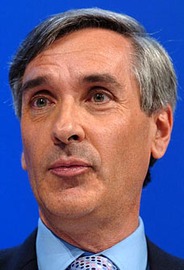
So wrote John Redwood MP today in his 'John Redwood's Diary'.  If you are unfamiliar with the name, John Alan Redwood is a British Conservative Party politician and Member of Parliament for Wokingham, Berkshire. (Salary £74,000 p.a., plus, plus, plus). What a lot of labels in one sentence.


It is probably true to say that anyone who would write the opening paragraph (above) is unlikely to be someone who rents his home.

He has been the MP for Wokingham for 30 years. He is the author of several books as well as, prior to becoming an MP and sometimes while still being an MP, he has been a schoolteacher and a Director of a merchant bank, a temporary postman and the Chairman of a major Stock Exchange quoted industrial company, a County Councillor and a University Professor, a shop assistant and the pioneer of privatisation worldwide, a bank clerk and the Head of the Prime Minister's Policy Unit. He is paid by various newspapers for his written opinions and appears regularly on television poltical programmes. Clearly, he is no slouch. Nor is he broke.

As an MP he has been a cabinet minister, an under secretary of state and is a Privy Councillor. He held 'shadow' roles when the Conservatives were in opposition during the Blair years.

Surprising to me, he campaigned for the UK to leave EU and continues to do so. On that basis I'd call him a good guy. Conversely, he generally has voted against laws to promote equality and human rights, according to www.theyworkforyou.com. That makes him a not-so-good-guy, depending on your point of view.

Point of view can be interpreted as 'opinion', can't it? Or, maybe, it can be 'prejudice', can't it? So, the same question pops up time and time again. What do you mean by that?

Try this for size:

prej•u•dice (prĕjˈə-dĭs)

  • n. An adverse judgment or opinion formed beforehand or without knowledge or examination of the facts.
  • n. A preconceived preference or idea.
  • n.The act or state of holding unreasonable preconceived judgments or convictions.
     
     According to Wikipedia, Prejudice is an affective feeling toward a person or group member based soley on their group membership. The word is often used to refer to preconceived, usually unfavourable, feelings toward people or a person because of their gender, beliefs, values, social class, age, disability, religion, sexuality, race/ethnicity, language, nationality, beauty, occupation, education, criminality, sport team affiliation or other personal characteristics. In this case, it refers to a positive or negative evaluation of another person based on their perceived group membership. Prejudice can also refer to unfounded beliefs and may include "any unreasonable attitude that is unusually resistant to rational influence".
     
    And they CAN touch you for prejudice! And they have statutes to back them.
     
    _ _ _ _ _ _


Saturday, 4 February 2017

Upon My Word!


I stumbled on a neat web page this month. It goes under the name 


It attempts to clarify words and meanings for simple people like me. For example, when I searched for a difference between ‘war crimes’ and ‘crimes against humanity’ it provided me with (in part):


War crimes, which may be committed during civil war or interstate wars, include summary execution, the exploitation of private property, torture, and the deportation of people against their will. The Geneva Convention’s Article 147 specifies that these acts are war crimes when they are committed in times of war (Richards, 2000). Crimes against humanity can be defined as the deliberate persecution of civilians on the basis of factors such as race, political beliefs, culture, or religion (Bassiouni, 1999). Crimes against humanity, which are often committed by government officials, usually result in acts of sexual violence, extermination, imprisonment, and human enslavement (Holocaust Encyclopedia, 2016).


I tried again by asking for the difference between Islam and Muslim. The response (in part) was:


Misuses of Islam and Muslim

  • Islam: grammatically speaking, Islam should only refer to the religion or acts done in the name of that religion, never a person who practices that religion. Islamic community and Islamic art are correct, Islamic man is not.
  • Muslim should be used to describe all people of the Islamic faith but not the faith itself. You may say that you are interested in the religion of Muslims, but never in the Muslim religion.

So far, so good. Let me try again. What is the difference between a journalist and a reporter? The answer, in part:


The Reporter is the person who reports on an event taking place anywhere in the world. He/she does not add their opinion or analysis to the report. Journalism, however, unlike reporting, would involve getting ‘under’, or ‘beneath’, the news. It can involve steps like investigation, analysis, and well thought out commentary or opinion. A journalist goes through all these steps when he writes a piece. In the case of an airplane incident, the journalist would go a few steps further than just reporting what happened. He would investigate the history of crashes for that airline or aircraft model, and talk about the maintenance issues, etc.


Hey, this is good. Good game, good game. I think we’re on a roll here. One more try, please.


What is the difference between a statesman and a diplomat? No explanation offered. Oh.


OK, what is the difference between a bigot and a fundamentalist? No explanation offered. Oh, dear.


One final attempt. What is the difference between a Prime Minister (or Premier) and a President? No explanation offered.


Aw, c’mon. Something isn’t right here. Here’s a good one: What is the difference between justice and revenge? No explanation offered - AGAIN!


Hmm. Makes you think, don’t it?  Maybe computers aren't all they're cracked up to be. Maybe it really is a case of GIGO.

⧫⧫⧫⧫⧫⧫⧫⧫⧫

Looking for definitions the old fashioned way - longhand!

British Dictionary definitions for education:


education

/ˌɛdjʊˈkeɪʃən/
noun
1.
the act or process of acquiring knowledge, esp systematically during childhood and adolescence

2.
the knowledge or training acquired by this process: his education has been invaluable to him

3.
the act or process of imparting knowledge, esp at a school, college, or university: education is my profession.


British Dictionary definitions for propaganda:


propaganda

/ˌprɒpəˈɡændə/

noun
1.
the organized dissemination of information, allegations, etc, to assist or damage the cause of a government, movement, etc
2.
such information, allegations, etc
 

propaganda in Culture

propaganda definition


Official government communications to the public that are designed to influence opinion. The information may be true or false, but it is always carefully selected for its political effect.
 

The American Heritage® New Dictionary of Cultural Literacy, Third Edition
Copyright © 2005 by Houghton Mifflin Company.
Published by Houghton Mifflin Company. All rights reserved.
Cite This Source
There now. There is ALWAYS a way to make a point even if we have to rely on lies, damned lies and statistics to do it. 

⧫⧫⧫⧫⧫

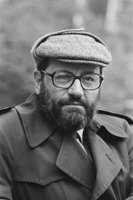
Do you know the name: Umberto Eco? Permit me to introduce him.  

Umberto Eco was an Italian novelist, literary critic, philosopher, semiotician (look it up), and university professor. He is best known internationally for his 1980 novel Il nome della rosa (Name of the Rose), a historical mystery combining semiotics in fiction with biblical analysis, medieval studies, and literary theory. (According to Wikipedia, that is).

He was born on 5th January 1932 and grew up under Mussolini's fascist regime and he died last year from pancreatic cancer.

I am grateful to Open Culture (.com) for making me aware of Eco's written list of the common features of fascism. In today's climate, they make interesting reading.

"It is enough that one of them be present to allow fascism to coagulate around it", he believed.
  1. The cult of tradition. “One has only to look at the syllabus of every fascist movement to find the major traditionalist thinkers. The Nazi gnosis was nourished by traditionalist, syncretistic, occult elements.”
  2. The rejection of modernism. “The Enlightenment, the Age of Reason, is seen as the beginning of modern depravity. In this sense Ur-Fascism can be defined as irrationalism.”
  3. The cult of action for action’s sake. “Action being beautiful in itself, it must be taken before, or without, any previous reflection. Thinking is a form of emasculation.”
  4. Disagreement is treason. “The critical spirit makes distinctions, and to distinguish is a sign of modernism. In modern culture the scientific community praises disagreement as a way to improve knowledge.”
  5. Fear of difference. “The first appeal of a fascist or prematurely fascist movement is an appeal against the intruders. Thus Ur-Fascism is racist by definition.”
  6. Appeal to social frustration. “One of the most typical features of the historical fascism was the appeal to a frustrated middle class, a class suffering from an economic crisis or feelings of political humiliation, and frightened by the pressure of lower social groups.”
  7. The obsession with a plot. “The followers must feel besieged. The easiest way to solve the plot is the appeal to xenophobia.”
  8. The enemy is both strong and weak. “By a continuous shifting of rhetorical focus, the enemies are at the same time too strong and too weak.”
  9. Pacifism is trafficking with the enemy. “For Ur-Fascism there is no struggle for life but, rather, life is lived for struggle.”
  10. Contempt for the weak. “Elitism is a typical aspect of any reactionary ideology.”
  11. Everybody is educated to become a hero. “In Ur-Fascist ideology, heroism is the norm. This cult of heroism is strictly linked with the cult of death.”
  12. Machismo and weaponry. “Machismo implies both disdain for women and intolerance and condemnation of nonstandard sexual habits, from chastity to homosexuality.”
  13. Selective populism. “There is in our future a TV or Internet populism, in which the emotional response of a selected group of citizens can be presented and accepted as the Voice of the People.”
  14. Ur-Fascism speaks Newspeak. “All the Nazi or Fascist schoolbooks made use of an impoverished vocabulary, and an elementary syntax, in order to limit the instruments for complex and critical reasoning.”
 Does it remind you of anybody?
 
 ⧫⧫⧫⧫⧫

MK Column

There is a two-headed organisation in Plymouth which publishes under the names of the British Constitution Group – BCG - (www.britishconstitutiongroup.com) and as UK Column (www.ukcolumn.org ). UK column broadcasts daily via the internet and publishes news articles that have a different perspective to main stream media (MSM). BCG publishes articles relevant to the British Constitution and conducts occasional meetings-cum-conferences. The first major conference was held last year in Winchester where the ‘Winchester Declaration’ was first published. The next conference is scheduled to be held in Nottingham on 22 April.
In Milton Keynes area there is a fledgling group of people with diverse interests and concerns who have joined together and have chosen to call ourselves ‘the MK Column’.  We subscribe to the two Plymouth organisations.
If you would like to identify with UK Column or BCG, simply go to their respective web pages. If you would like to identify with MK Column (and you don’t have to live locally to do that, please call me on 07599 295225 or send an email to mkcolumn@gmail.com. We will be pleased to hear from you.

Thursday, 26 January 2017

Michael in January 2017


MICHAEL

January 2017


Greetings!
The nonsense of the recent silly season has passed and the question on my lips is now: Where to begin the New Year? In the words of the unnamed Irishman when asked for directions to Dublin, he replied: It might be better if you didn’t start from here.  That’s roughly how I feel about January 2017.

Everybody knows that there have been only two major stories worth following during the month of January. The first was the American Presidential election and the second was the High Court ruling in London concerning EU Article 50 – and I’m heartily sick of hearing about both of them. (And that’s from an avid ‘Leaver’!)


While we were distracted by Christmas and New Year celebrations, the world continued to turn. Politicians of all persuasions and nations continued to peddle their self-interested and party-interested policies; across the planet people murdered other people or destroyed their mind and spirit if not the body; the hungry died of hunger, same as they do every day; nation continued to bomb nation; charities asked for charity: to feed a donkey, to support a tiger, to keep a dog, to provide a blanket; and the UK government made its case for its new Commonwealth Development Corporation (CDC) Bill which is designed to permit government to raise the limit of support for this Corporation; while the NHS is allegedly falling apart; while schools need to be involved with the depressed minds of young children; while the government presses on with muzzling our media which we know already doesn’t tell us the truth, the whole truth and nothing but the truth. But who cares about all that?

In my humble opinion, nearly all of it is avoidable and overcome-able if WE, THE PEOPLE would only think, look at things as they are presented to us and not believe everything we see, hear and read. That would be a good start.  Better yet if we could look, see and DO things differently.

~~~~

I thoroughly enjoyed our family and friends Christmas gatherings and I happily welcomed 2017 fast asleep, as befits someone of my age. The New Year, however, didn’t get off to a good start. I wrecked our family car right here in Newport Pagnell High Street and suffered body shock as a consequence. No blood or broken bones, thankfully, but swollen and painful feet, which my GP diagnosed as shock induced gout. For what it’s worth, my blood-sugars went haywire, too.

During the run-up to Christmas and afterwards I gave some thought to the ideas of Life, Liberty and the pursuit of Happiness, as you do in times of melancholy, or even in retirement, or when a Presidential election is imminent.  That event must have been the trigger, I think. Whatever, I focussed on the American Declaration of Independence. Perhaps ‘thought’ might be too strong a word; nothing deep or spiritual, please understand. Just quiet thoughts/reflection/contemplation/rumination/deliberation – you know what I mean.

It is a remarkable document and it begins:

IN CONGRESS, JULY 4, 1776

The unanimous Declaration of the thirteen united States of America
When in the Course of human events it becomes necessary for one people to dissolve the political bands which have connected them with another and to assume among the powers of the earth, the separate and equal station to which the Laws of Nature and of Nature's God entitle them, a decent respect to the opinions of mankind requires that they should declare the causes which impel them to the separation.

We hold these truths to be self-evident, that all men are created equal, that they are endowed by their Creator with certain unalienable Rights that among these are Life, Liberty and the pursuit of Happiness. — That to secure these rights, Governments are instituted among Men, deriving their just powers from the consent of the governed, — That whenever any Form of Government becomes destructive of these ends, it is the Right of the People to alter or to abolish it, and to institute new Government, laying its foundation on such principles and organizing its powers in such
form, as to them shall seem most likely to effect their Safety and
Happiness. Prudence, indeed, will dictate that Governments long
established should not be changed for light and transient causes; and accordingly all experience hath shewn that mankind are more disposed to suffer, while evils are sufferable than to right themselves by abolishing the forms to which they are accustomed.

But when a long train of abuses and usurpations, pursuing invariably the same Object evinces a design to reduce them under absolute Despotism, it is their right, it is their duty, to throw off such Government, and to provide new Guards for their future security. — Such has been the patient sufferance of these Colonies; and
such is now the necessity which constrains them to alter their former Systems of Government. The history of the present King of Great Britain is a history of repeated injuries and usurpations, all having in direct object the establishment of an absolute Tyranny over these States. To prove this, let Facts be submitted to a candid world.


Did you see what I saw in this document? All men are created
Equal and we have rights, including the right to change government when the need arises – not just when the government of the day says it is time. When this equality is undermined (abuses and usurpations) men have a right to do something about it. We are endowed with Rights (I’ve touched on that subject before now) and that among these Rights are Life, Liberty and the pursuit of Happiness.  For all men. For some people that can be a big ask. My January question is:- How are we (in UK) doing so far?

WE would do well to observe that the American declaration, written after a bitter war with King George and his troops, has its roots in our own Magna Carta 1215, which was the product of another unjust King, King John. The people (barons) resisted King John’s tyranny and settled the matter with that document which King John affirmed should exist in perpetuity.  QUESTION: Why, do you suppose, our lawmakers today would argue that King John’s gift isn’t applicable today? (Tony Blair was notable in this regard). ANSWER: Because if it is acknowledged it automatically curtails some of the powers that Parliament, the legislators and the lawyers have assumed for themselves.

Back to January 2017.  I have just listened to the Supreme Court ruling (not unanimous) expressed by Lord Neuberger as head honcho. More than that, I’ve listened to newspaper, V-V and radio political pundits repeating two lies which, for the most part, went unchallenged.

The first lie is to claim that we have no written Constitution. Four copies of the original Magna Carta 1215 exist and, as I’ve noted already, formed the basis of the American Declaration and Constitution, as well as the basis for the constitutions of Canada, Australia, New Zealand and South Africa, amongst others. The Magna Carta wasn’t just a gift to the people of England by their King. It was also an echo of the existing customs and practices of many of the peoples of northern Europe.

The second lie is to claim that Parliament is sovereign. It isn’t true and it behoves us – you and me – to examine why so many Parliamentarians insist that Parliament IS sovereign. Think about it.
Could the Freedoms and Rights bestowed on English people by their tyrannical King, have become the property of a tyrannical Parliament because of our own carelessness? It seems so. At least, that is what some Parliamentarians seem to think.

We, the People, grant to elected members of Parliament (the legislators) the right to publish laws and regulations. But we reserve the right to change Parliament when its members fail in their service TO US.  Additionally, we have been given the right in perpetuity to annul inappropriate laws by means of Trial by Jury. This right is the essence of Democracy. And I emphasise that Parliament is supposed to serve the people, not the people serve Parliament.

Understand, if you will, that suffrage (the right to vote) is not democracy. Dictators across the world permit citizens to vote and then overturn the results when it suits them. Just as they do in EU.

Voting for a party is not indicative of a democracy. The party system permits vested interests to determine a so-called manifesto to which members of the party - locally and nationally - might (or might not) subscribe. This, too, is true all over the world.  The party system doesn’t permit non-members to stand for election in a constituency. Those people are described as Independent and, by definition, not a participant in party-based politics.

So, think about this, if you will. If the constituency electorate becomes disaffected with a party-sponsored elected Member of Parliament, to who will that party-sponsored MP be answerable? Certainly not to non-party members.

I’m fully aware that we can’t overturn years of smoke-and-mirrors political illusion overnight, but we won’t ever force the changes if a start isn’t made NOW.

~ ~ ~ ~

When I look through my window to the big wide world outside, what evidence is there that people have Life, or Liberty, or are pursuing Happiness? Not much, I suggest. Too often I see those with jobs are living a life of drudgery. Not always, but definitely too often. (drudgery is defined as: menial, distasteful, dull or hard work). Liberty appears to be a figment of our imagination. (Liberty is defined as: 1. freedom from arbitrary or despotic government or control. 2. freedom from external or foreign rule;
independence. 3. freedom from control, interference,
obligation, restriction, hampering conditions, etc.; power or
right of doing, thinking, speaking, etc., according to choice.
4. freedom from captivity, confinement, or physical restraint).

And Happiness? How are we doing with happiness? In the minds of many, too many, happiness seems to be about acquiring things or struggling to acquire things. Where did that idea come from/from where did that idea come? We weren’t born with it, were we? Yet the tiniest babies show all the signs of wanting freedom in its various guises. Watch them and tell me I’m wrong. After essential well-being (food/shelter/etc) has been addressed the idea, the desire for freedom, never goes away. (OK. So maybe the baby is just looking for instant gratification and maybe all of us are babies.)

Most people will acknowledge that THIS DECLARATION is based upon our own Magna Carta 1215 – King John’s gift to the people in perpetuity. Having been given, willingly or unwillingly, I put it to you that no man or organisation has the right to determine that the people may not have it. King George III’s efforts to stifle the freedom and pursuit of happiness that colonials at the time sought, through his use of punitive legislation and taxes, brought about the exercise of King John’s gift.

I put it to you, dear reader, that if we treat this gift lightly and without proper consideration of what it is, we do so AT OUR PERIL.

THINK ABOUT IT! PLEASE!
and if the ideas expressed here
resonate with you, get in touch with me, please.

~~~~~

I’m so pleased that I had written (above) before hearing Barack Obama’s farewell speech last night (10th Jan). Speaking in Chicago, he said: “This is where I learned that change only happens when ordinary people get involved, get engaged, and come together to demand it.
"After eight years as your President, I still believe that. And it’s not just my belief. It’s the beating heart of our American idea – our bold experiment in self-government.
"It’s the conviction that we are all created equal, endowed by our Creator with certain unalienable rights, among them life, liberty, and the pursuit of happiness.
"It’s the insistence that these rights, while self-evident, have never been self-executing; that We, the People, through the instrument of our democracy, can form a more perfect union.
"This is the great gift our Founders gave us. The freedom to chase our individual dreams through our sweat, toil, and imagination – and the imperative to strive together as well, to achieve a greater good.”
Oh! My word! When, I wonder, will our own Prime Minister refer to, defer to and reflect upon our own Constitution in this way? Might it happen before her own farewell speech, do you think?  Don’t hold your breath. And, by the way, keep in mind that our Prime Minister wasn’t elected to that office by THE PEOPLE. She was elected by the Parliamentary party to be THE PARTY LEADER.  How tenuous is our grip on democracy?
Here is another thought: What might happen if she decides the whole struggle for Brexit is more than she can stomach? What if, secretly, she has a different agenda? What if she does a David Cameron and resigns? What if President Trump puts a rhetorical flea in her ear when they meet? What if her own government continues to take steps to ally our UK military with EU military, as they are in the process of doing right now? (An indication, I suggest, of less than ardent commitment to exiting EU). How much uncertainty about what might happen next do the bleaters need - those who say they don’t know and want to be assured that the sun will rise tomorrow – how much more do they need to convince them that something just isn’t right in the state of Denmark?
How much more time or evidence do you NEED before you are persuaded to join me and others in trying to change these things?

~ ~ ~ ~ ~

MK Column

There is a two-headed organisation in Plymouth which publishes under the names of the British Constitution Group – BCG - (www.britishconstitutiongroup.com) and as UK Column (www.ukcolumn.org ). UK column broadcasts daily via the internet and publishes news articles that have a different perspective to main stream media (MSM). BCG publishes articles relevant to the British Constitution and conducts occasional meetings-cum-conferences. The first major conference was held last year in Winchester where the ‘Winchester Declaration’ was first published. The next conference is scheduled to be held in Nottingham on 22 April.
In Milton Keynes area there is a fledgling group of people with diverse interests and concerns who have joined together and have chosen to call ourselves ‘the MK Column’.  We subscribe to the two Plymouth organisations.
If you would like to identify with UK Column or BCG, simply go to their respective web pages. If you would like to identify with MK Column (and you don’t have to live locally to do that, please call me on 07599 295225 or send an email to mkcolumn@gmail.com. We will be pleased to hear from you.